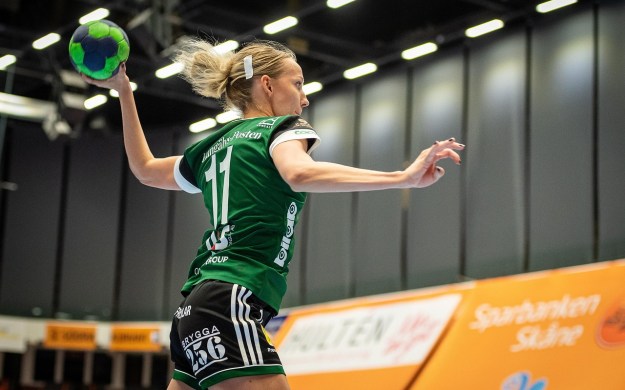
The broad, routine use of “TERF” as a slur against ordinary women (not just known radical feminists) — mothers, school parents, female athletes, teachers, and safeguarding campaigners — for simply discussing safeguarding in schools or questioning risks/threats in women’s contact sports (including boxing) did begin to surge around 2018–2019 and became dominant by 2020.Pre-2018 ContextBefore this period, “TERF” (coined neutrally in 2008) was mostly confined to online feminist debates targeting prominent figures. It was not yet a default label slapped on everyday women raising practical concerns.The 2018–2020 Escalation
- 2018–2019 turning point: UK groups like Fair Play For Women began publicly highlighting fairness and safety issues in women’s sports. Ordinary athletes and parents (e.g., Sharron Davies and Olympians signing open letters) questioned male-advantage retention in categories. At the same time, school safeguarding debates grew (e.g., mixed-sex facilities, social transition policies without parental consent, or “gender ideology” in curricula). Women voicing these were increasingly called “TERFs” on social media and in activist circles as a way to dismiss or shame them without engaging the substance. fairplayforwomen.com
- 2020 peak: J.K. Rowling’s June 2020 essay (detailing her concerns about self-ID, women’s sex-based rights, prisons, sports, and safeguarding) acted as a massive accelerator. Millions saw ordinary women — not radicals — publicly agreeing with similar points on schools and sports, only to be flooded with “TERF” labels, boycotts, and threats. This coincided exactly with heightened conservative political activity (e.g., American Principles Project and similar PACs running ads on “destroy girls’ sports,” plus state-level pushes for sex-based categories in athletics and school policies). The overlap turned the issue into a highly contentious and domineering verbal battle:
- One side weaponised “TERF” as an all-purpose shut-down against any female voicing safeguarding or safety worries (in schools, boxing/MMA, rugby, etc.).
- The other side amplified policy critiques through ads, bills, and media, framing trans inclusion as a direct threat to women and girls.
The result was a self-reinforcing loop: real-world policy clashes (sports fairness, school protections) met intense online policing via the slur, making neutral discussion almost impossible by late 2020. What had been niche feminist pushback became mainstream parental and athletic concern, while the “TERF” label expanded to smear non-ideological women as bigots for asking basic questions about threat, fairness, or safeguarding.This 2020 inflection is widely documented as the moment the verbal war went fully mainstream and polarised.
 Dairy of A Nonny Moose