The Lost Stories of Early Christendom: Gildas, Arthur, and Glastonbury
A friend referred me to Youtube videos, And Did Those Feet (pt 1 and 2) and Light In The West – Jesus “lost years” and Joseph of Arimathea in Britain, which inspired me to read more. Lionel Smithett Lewis, in his book St. Joseph of Arimathea at Glastonbury, suggests that the 12th-century historian William of Malmesbury referenced a lost text, The Acts of the Illustrious King Arthur, written by the 6th-century monk Gildas Badonicus. When I searched for this text online, Google found nothing, prompting me to dig deeper. What I’ve uncovered is not just a historical puzzle but a critique of modern scholarship’s biases—and a thrilling story of early Christendom’s roots in Britain, possibly tied to Jewish Christians fleeing persecution in Israel.

The Claim and Its Context
Lewis’s claim is tantalizing: William of Malmesbury, in works like Gesta Regum Anglorum (c. 1125) or De Antiquitate Glastoniensis Ecclesiae (c. 1129–1139), Lewis suggests could have cited The Acts of the Illustrious King Arthur by Gildas, a text now lost, perhaps in the 1184 fire that ravaged Glastonbury Abbey’s library. Gildas, known for De Excidio et Conquestu Britanniae (c. 6th century), lived near the time of the Battle of Mons Badonicus (c. 490–517), a victory later attributed to Arthur in the Historia Brittonum (c. 829). Yet De Excidio omits Arthur, and no surviving record mentions this Acts. William’s Gesta briefly describes Arthur as a warrior aiding Ambrosius Aurelianus at Badon, without citing Gildas, while De Antiquitate’s Arthurian references appeared later.
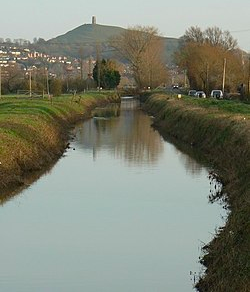
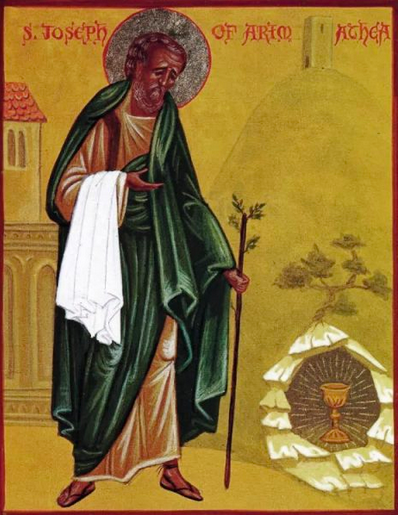


Could the legend of Arthur be based on “Artúr mac Áedáin, British-Roman prince of Dál Riata (a kingdom roughly extending between western Scotland and northeastern Ireland) in the 6th century AD” This Artur was recorded as dying in a battle against the Angles around the year 600 AD. It is worth noting that the word King derives from the Breton word for land owner. Could – here is a leap, bare with me – Arthur be linked somehow to the Twelves Hides of Glaston supposedly given to Joseph of Arimithea and his companions? It was still documented in the Doomsday book and during Henry VIII’s reign that no tax had been paid for that land.

An example of how we project modern customs onto historical accounts is how we view the Bible today. I believe it was a gathering of early writing (from which female voices have been much removed, possibly by King Constantine) from a time when monks, scholars and other people had begun to document stories they had heard passed down orally.

Therefore the stories in the Bible could have happened at any point in antiquity and could benefit from better context to mine them for information about life two millenia ago. We could see how much people have changed, or not. We can see patterns of behaviour and climate. We could re-read the Bible as a collective work from a central, fertile part of the modern world when people were spreading across Europe, escaping persecution or navigating extreme weather, plagues, locusts, droughts, famines, tsunamis, earthquakes, volcanos and each other.

I think it is an absolute waste to view the Bible only for reasons of religious preaching. In 2025, there are many excellent, recent teachings, writings and ideas, which relate experiences and provide guidance and examples of how to navigate life today. This means the Bible could be viewed as a testament of life in the past and mistakes made, which we don’t have to keep repeating, in the way a central motive for founding Christianity at Glastonbury persists into the 21st Century unaddressed.
What of Gildas Badonica?
We know little about 6th-century Britain—its culture, literacy, or Gildas’s audience—that the term ‘moralistic’ used by modern scholars to describe Gildas’ accounts imposes modern assumptions and projects modern commercial motives on something that could be anecdotal or spiritual. People today don’t even like listening to their parents, so anyone preaching is going to be dismissed as ‘moralistic’ rather than actually be curious about their viewpoint from their time. That is, of course, unless it comes from something like the Bible. Then reasoning, analysis and any kind of curiosity disappears. Let us reason and analyse the amazing events, which might have happened 2,000 years ago.
Despite at least 2,000 years of Christianity and. more of older religions and traditions, how do we stilll not have a clear understanding today of what is right and what is wrong?
De Excidio blends history, theology, and critique, recounting Britain’s past from Roman times to Badon. Today’s views on his contemporary writing frames Gildas a preacher, not a chronicler who might have written about King Arthur, who is widely accepted today to be purely a myth and legend. Could King Arthur have been a Briton fighting the invading Saxons?
Could he have supported the early Christian Church and been a pilgrim who carried Jesus’ bloodline to Britain? Could Arthur be linked to St George? Someone could have been leading the fight fight to keep the Saxons out of Celtic areas such as Cornwall, Wales, Ireland, Scotland, the Channel Islands and Brittany as, still to this day, they retain language, culture, music, folk tales and crafts, which are distinct from the rest of the UK. Gildas’ work was what it was—a response to his era, not a category we can neatly define.
We could relearn to see Gildas as a versatile figure, befitting his handle The Wise being attributed to him. The Life of Gildas (c. 12th century), though hagiographic, links him to Arthur, suggesting a cultural memory that could stem from a lost work.
The Story of Early Christendom
Gildas, a literate Christian, might have recorded this hero’s deeds in The Acts of the Illustrious King Arthur, preserved at Glastonbury until the 1184 fire. Lewis, in 1922, wove these threads—texts, lore, and landscape—into a narrative of Glastonbury’s apostolic roots, not to promote but to celebrate. Cultural icons, like the Looe boat in Cornwall, encode similar memories of early Christians or heroes, filling gaps in the record with imagination.

Imagination and Diverse Voices
Modern scholars understandably work from documented evidence, but sometimes miss circumstantial or disparate evidence, which completes a picture and tells a worthwhile story. Why did people tell stories, especially before written language started and for a long time before general literacy? How else would you spread a message, as a Tiktok video might do today, before transport, reading and writing? Stories, songs and poems would carry the events, people, ideas, examples and teachings of the day to be heard, remembered and passed on.
Lewis’s claim—that William of Malmesbury cited Gildas’s The Acts of the Illustrious King Arthur—lacks evidence but opens a door to an exciting story of early Christendom, rooted in Jewish Christians fleeing persecution and flowering in Glastonbury’s sacred landscape. We could see Gildas as a versatile chronicler, Lewis as a humble steward of tradition, and Glastonbury as a beacon of faith and legend. The 1184 fire may have erased texts, but imagination, diverse voices, and cultural icons like the Looe boat keep the story alive.
References:
- Lewis, Lionel Smithett. St. Joseph of Arimathea at Glastonbury, or The Apostolic Church of Britain. 1922 (reprinted 1927, 1955, 2004).
- William of Malmesbury. Gesta Regum Anglorum. c. 1125.
- William of Malmesbury. De Antiquitate Glastoniensis Ecclesiae. c. 1129–1139.
- Gildas. De Excidio et Conquestu Britanniae. c. 6th century.
- Historia Brittonum. c. 829.
- Life of Gildas. c. 12th century (attributed to Caradoc of Llancarfan).
- The Age of Arthur – John Morris
- King Arthur: Myth-making and History, Routledge (New York, NY), 2002 – N. J. Higham
 Dairy of A Nonny Moose
