I have just spent the last 4 days, while travelling, socialising with friends, sorting things out, cooking, eating and going for walks, being plied with virtual rotten vegetables by a pack of people who believe that vaping is the best way to stop smoking tobacco.
The usual inane and repeated, skewed questions kept coming from the politer and more focused of these vaping advocates. They snorted at the suggestion that unassisted “cessation” was the most common and successful way to stop smoking permanently. Possible reasons why vaping may be one route to stop smoking could be for someone with late stage cancer, who might not survive to enjoy life without tobacco, so reducing harm is relevant. I could imagine other types of people and sets of circumstances where vaping may be better than smoking for that individual.
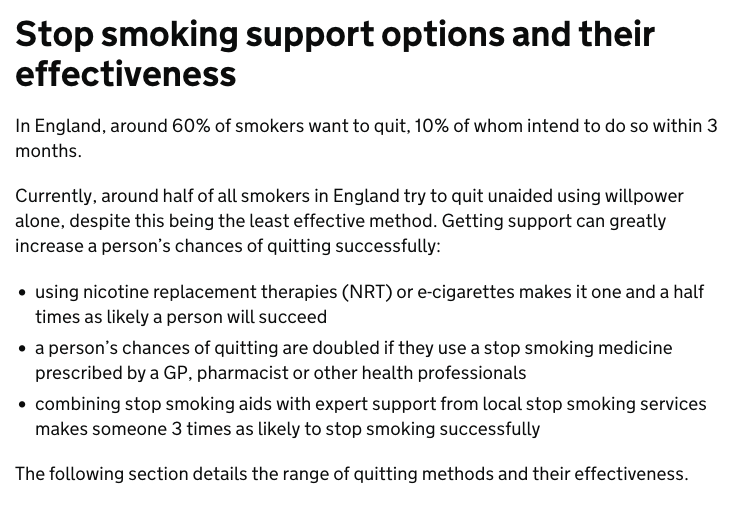
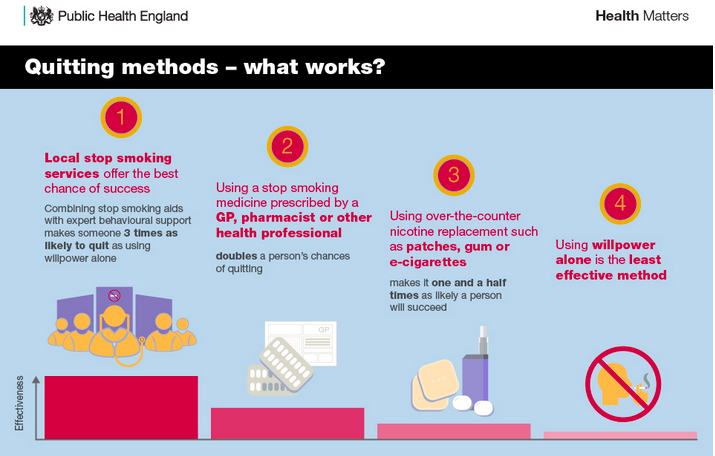
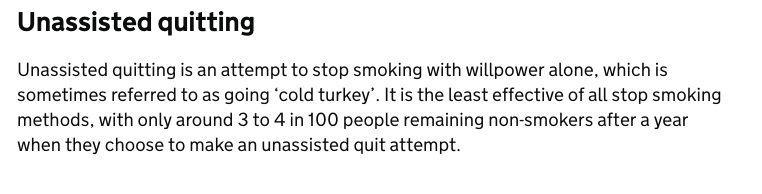
However, the UK government presents medication, substitutes and vaping as ways to increase the likelihood of success if someone wants to quit smoking. Unassisted cessation is played down as ‘cold turkey’ – an expression for coming off class A drugs, which tobacco is not – suggesting a pain threshold of withdrawal that would be incomparable to the mental anquish, fierce protection of beliefs and health defects they currently put themselves through.
You don’t have alliances of apple eaters. Nor are there research committees for people who walk for at least an hour each day. Below are the articles I found when challenged to provide any reasons why the NHS suggesting vaping was a conflict of interest. The heavily suggested response, delivered with the subtlety of a note shot at the forhead on an arrow, was “none”.
Firstly Inventing conflicts of interest: a history of tobacco industry tactics – this delves into the history of tobacco industry tactics, now widely used by other unhealthy commodity industries, involving PR company Hill and Knowlton to respond to emerging reports of the harms from tobacco and nicotine inhalation.
Next, Smoke and mirrors? Conflict of interest declarations in tobacco and e-cigarette-related academic publications, written this year to show how the vaping industry is riding this wave of scientific meddling, media representation and skepticism about harms to steam-roller more enlightened healthful thinking.
The smokescreen of the tobacco industry’s use of science is another one on the same topic.
All the above were accused by people with pre-conceived ideas about the “reduced harms” from vaping – totally ignoring the well-known increased threat to people who deny they take health risks – of being biased and unobjective. This is a little like a table criticising a wall for not standing on its own legs.
The threats to young people from vaping products, sold much more brazenly than tobacco, is well covered in the media and medical press. This article E-Cigarettes are More Addictive than Traditional Cigarettes—A Study in Highly Educated Young People shows how the intelligence does not protect anybody against being deceived into believing that vaping is a less harmful habit than smoking tobacco when health authorities are endorsing this viewpoint.
See below for the level of conflict of industry from industry research and funding, which leads the UK government to deceive people about how easy it is to stop smoking without withdrawal symptoms as Public Health England would have you believe.
For people who want to stop smoking, there are workshops by Allen Carr for those who can afford it, or Carr’s book The Only Way to Stop Smoking Permanently can cost less than £10 on eBay and provides plenty of information to equip someone with accurate facts to know how easy it is to quit. That is just my opinion and won’t work for everyone, particularly with the many obstacles society, health authorities and the media put in their way. It has to be a choice to take action.
Personally, friends who had read the book and wanted to boast about their success sounded a little zealous. Unfortunately, the tobacco industry had latched onto this and labelled these ex-smoking converts as “anti-smokers”, implying they were social pariahs not to be invited to dinner parties.
As a result, it took me 6 months to start reading Carr’s book, which I did to fill time while waiting for a work client, not because I had planned to stop smoking around that time. In 2004, one could still smoke indoors and I had some amusing experiences. For example, Allen Carr wrote: “someone will see you reading this book and tell you how hard it is to stop smoking” and the musician performing on his guitar stopped and said over the mike “I read that and stopped for a few weeks.” In other words, Carr is already warning you about other people with undisclosed circumstances, whose experiences could derail you before stubbing out your last cigarette at the end of the book.
Today, there is vaping and people smoking outside, so these coincidences could not happen, drawing a gulf between the text and the reality, into which doubters can proliferate their views.
If the following is true, why would Public Health England need to keep saying it:
 Dairy of A Nonny Moose